
Festival Planning Checklist: 10 Things to Get Under Control
EVENT PLANNING GUIDE
Festival Planning Checklist: 10 Things to Get Under Control
Updated on September 29, 2026 | Written by Rachella Thomas
“I’m planning a festival. What do I need to plan?”
You've got a date in mind. A site. Maybe you're already in conversation with performers, stallholders, or sponsors. Suddenly there are a lot of moving parts, and you’re not sure what to do next.
I've spent more than 26 years working on major events and festivals, and I've learnt a thing or two about how to plan one.
Here’s what I know: festivals are always more complex events than you think they’ll be. The best way to deal with the enormity of the task is to break it into separate areas of work.
Of course, that’s exactly why I made the Festivals Kit, to bring these steps into an organized event-planning framework.
There are ten big parts of a festival you need to plan. Use this guide as a sense check to make sure you’re thinking about all of them before you get too far into the detail.

1. Festival Brief & Objectives
Start with what you're actually creating.
What is the festival? Who is it for? What is it trying to achieve? How big is it? What does the audience experience look like? What parameters are you working within?
Get those decisions documented before the project gets too far ahead of them. Keep your answers top of mind from planning through event day.
When someone suggests adding another stage, a random activity, or an expensive idea three months from now, you need more than “that sounds good” to decide whether it belongs.
Before you get too much further into planning, take a moment to make sure you understand what you’re taking on. Coming up with the festival idea is the exciting part. Turning it into an actual event is where the work begins.
Read How to Start a Festival. Should you actually do it?
2. Budget & Revenue
Start the festival budget early, even if most of the numbers are still estimates.
Build a forecast list of costs for the proposed site, production, infrastructure, artists or programming, staffing, security, medical, waste, marketing, insurance, transport, and whatever else your particular event requires.
Make this one of the first things you do to gain a realistic perspective of how much the festival will probably cost to produce.
Then look at the other side.
Do you have enough revenue streams to cover costs? Where is the money coming from? Tickets? Sponsorship? Grants? Stallholders? Partners?
Don't let an optimistic idea of revenue streams hide an event you can't afford to produce.
3. Site & Infrastructure
A festival site needs to work operationally, not just look good on Instagram reels.
Along with your forecast budget, audit potential event sites early in the process.
Think about entrances and exits, audience movement, stages, food and beverage, toilets, power, water, waste, accessibility, fencing, back-of-house areas, loading, emergency access and all the temporary infrastructure required to make the site function.
Then walk it out.
Draw a site map, then measure the actual site to make sure it fits.
And, importantly, make your site map to scale and allow space for people to move through the site. A site plan can look perfectly sensible on a screen but feel completely different when you're standing there with a thousand people, a stage and 10 food trucks.
4. Program & Audience Experience
Now think about what people will actually experience.
Plan out a festival program of performers, speakers, workshops, activities, installations, food, markets, demonstrations — whatever makes sense for your festival.
Consider how the program will work as both a patron experience and a logistics operation across the site.
Where will people naturally gather? When will they move? Are major activities competing with each other? Are there dead periods? Can the site comfortably handle the audience you're moving around it?
A festival program isn't simply a list of things happening. It's the event's rhythm.
5. Suppliers & Contractors
Unlike a small venue-based event, festivals will accumulate suppliers remarkably quickly.
Production. Infrastructure. Toilets. Waste. Security. First aid. Catering. Equipment. Signage. Transport. Cleaning.
It’s easy to lose track of bookings and let small details fall through the cracks. You need to track and update supplier bookings as they change.
Keep one clear record of who is supplying what, what has been quoted and approved, what information you're waiting for and when they're expected on site.
For years, I’ve used one master spreadsheet template to manage supplier bookings, along with an itemised site requirements linked to each supplier.
6. People & Responsibilities
As the festival grows, the need for clear ownership grows too.
Work out who is responsible for each area: production, site operations, artists or programming, suppliers, staff and volunteers, safety, ticketing, communications and so on.
One person may hold several responsibilities on a smaller event. That's fine. The problem comes when the event grows, but the allocation of responsibilities does’t.
Make sure you aren't overloading anyone with too many tasks, because that’s another way things will fall through the cracks.
7. Risk, Safety & Contingencies
Risk planning shouldn't happen just because it’s needed for the approvals process.
Best practice festival planning develops a risk management plan alongside the event management plan. That means, when planning your event overall, you’ll keep potential risks in mind.
Consider crowd movement, weather, temporary infrastructure, equipment, food and alcohol (where relevant), medical response, communications, emergency procedures, and the particular risks created by your event.
Think about potential risks at every stage of event planning, and decide how to prevent them rather than remedy them after the fact.
Pro Tip: Requirements vary significantly by event and location, so identify the appropriate local requirements and seek their advice early.
8. Approvals, Insurance & Event Requirements
Find out early what permissions, licences, insurance, notifications, documentation or other requirements apply to your particular festival.
From experience, I’d say you will have to follow an official approval process because a festival is a large group of people gathering in a public space, and may include alcohol and/or loud music.
But don't assume anything. Permits and approvals vary enormously depending on location, site, attendance, activities and what you're putting on the ground. So I’ll stress it again: always check in with your local authorities as early in the process as possible.
Some stakeholders require you to submit an application and full event management plan several months before the event date. Finding out six weeks before the festival that something had a twelve-week approval process is not a nice way to learn this lesson.
9. Marketing, Ticketing & Audience Communication
Your audience needs a clear journey from hearing about the festival to arriving at the gate. That includes marketing, event information, ticketing or registration, confirmation communications and the practical information people need before they arrive.
If you're selling tickets, don't treat the ticketing platform as something you bolt on at the end.
The ticketing sales process can become an exciting part of the customer journey if you plan it out right. Ticket sales data can become useful planning information as the audience responds to your marketing plan and program line-up. I've worked with Eventbrite many times as an event organiser, and when it comes to the finer details of festival ticketing, I'm happy to take their lead.
Read Before You Put Your Event Tickets on Sale
10. Event Delivery
Eventually, you will move into the final event delivery phase.
Your focus will shift from pre-event planning to event-day operations. Create bump-in or setup schedules, supplier arrival handbooks, site checklists, event-day timings, communication plans, and contingency plans.
Your run sheet and operational documents should be clear and professional. They have a simple purpose: to tell people what needs to happen, when it needs to happen and who is responsible for making it happen.
It’s essential you go into the event delivery phase prepared for anything.
Read What Happens When the Run Sheet Goes Off Schedule
Festivals Kit - Event Planning Templates
Get the same tools I’ve used and developed over decades of major events and festivals in the Festivals Kit.
The Festivals Kit includes key planning documents: spreadsheets, checklists, and templates that turn your overwhelming to-do list into a ready-made festival plan.
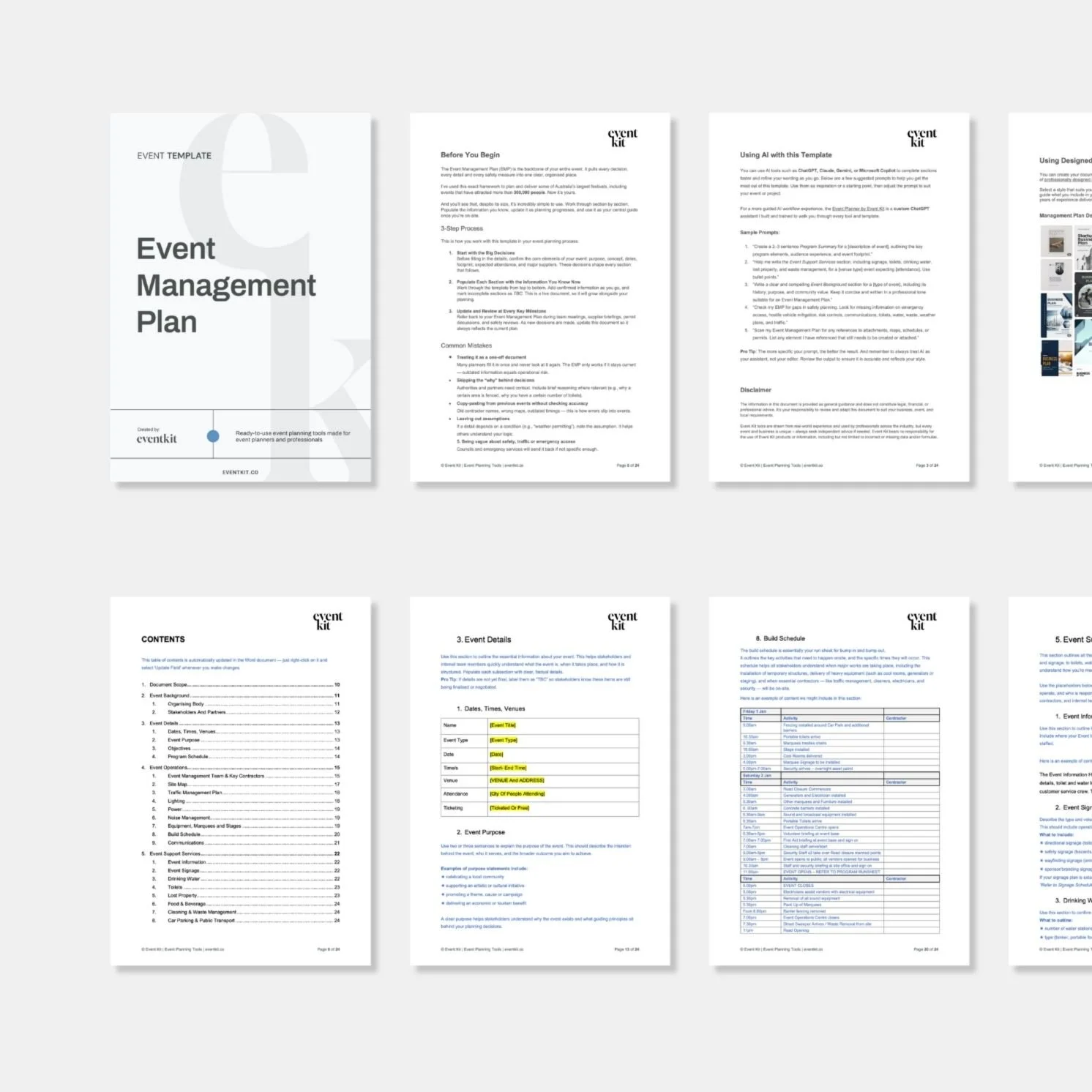
Festival Planning: You don't need to know everything before you start, but you do need a professional event-planning framework. Get it in the Festivals Kit.
→ If you found this useful, feel free to share it with a fellow event planner or your event network. They’ll appreciate you passing it on.
Related Reads


Meet Your Mentor
Rachella Thomas is an award-winning event producer with more than 26 years of experience delivering major events. Her work includes the Australian Open, Commonwealth Games Queen’s Baton Relay, Melbourne Food & Wine Festival, and other renowned large-scale events and festivals.
Rachella founded Event Kit, where she turns decades of professional event know-how into practical tools for event planners worldwide.
Learn More → ABOUT
Want to try Event Kit?
Get a professional Event Run Sheet template for free!



Description
Community Festivals Planning Kit
Designed for:
Festival producers, community event organizers and event planners managing large-scale, public and outdoor events.
Helps you:
Manage budgets, permits, suppliers, programming, production and event-day logistics with professional templates built for community festivals and public events.
What’s included:
EXCEL
• Event Budget: Public Events and Festivals
• Event Delivery Plan
• Event Entertainment Bookings
• Event Equipment and Supplier Bookings
• Event Plan Timeline: Festivals
• Event Production Schedule
• Event Run of Show
• Event Signage Plan
• Site Specifications for Festivals
• Stage Program Plan
PDF
• Event Brief Writing Guide
• Event Timeline for Small Festivals
POWERPOINT
• Outdoor Event Site Map
WORD
• 12 Pre-Written Emails for Planning Public Events
• Event Brief
• Event Contact List
• Event Kit Checklist
• Event Management Plan
• Event Site Safety Checklist
• Lost Child Checklist
• Lost Property Logbook
• Outdoor Venue Audit Checklist
• Public Event Permit Checklist
• Vendor Event Manual
Plus:
• Built-in planning tips and guidance notes
• AI prompts to help you work faster
Pairs well with:
Any collection in the shop. There's no wrong combination — grab what fits your events and build from there.
Note: This is a digital product. No physical item is shipped.
Customer Service
Within a few minutes of purchase, you’ll receive an email with a link to download your files. The download link expires after 24 hours. If you can’t find the email, please check your Spam or Junk folder.
Need help getting started?
Notes and instructions are built into our templates to give you structure, guidance and practical real-life examples. These are not blank templates. They’re designed to guide you as you use them.
Still got questions?
Template Manual
FAQs
Contact Us
Template License
Event Kit templates are licensed for use by one business or sole operator. You can edit, customize and reuse them across every client, event, and project your business handles. Add your own branding, update colors and fonts, remove sections you don't need, and adapt the content to suit you.
Read full Template License