
The Vendor Checklist You Actually Need
EVENT PLANNING GUIDE
The Vendor Checklist You Actually Need
Updated on September 30, 2026 | Written by Rachella Thomas

Event planners don’t need another checklist. You need a different approach with vendors and suppliers.
That's why I haven't made that template for you.
Those lists can make you feel like you’ve covered everything because you’ve ticked every box. But that’s not necessarily where things go wrong.
You need to know what actually matters, and the answer is in four key questions:
What are they providing? → What do they need from us? → What do we need from them? → Who else needs to know?
Those four questions force you to think about the relationship between the supplier and your event, rather than work through a generic checklist that may or may not apply.
It’s a more strategic, big-picture way to dig into the details. And it’s worked well for me for many years.

The Context
Supplier management is really about eliminating assumptions before they reach event day.
Answers will differ for every supplier, but your job as the event planner is to connect those separate answers to the one event plan.
The AV supplier can tell you they need access at 7 am, but if that information doesn't reach the venue or loading schedule, you still have a problem. Catering can tick a box asking for power supply, but if production never receives the details of that information, ticking it off a vendor checklist achieves nothing.
I’ve learnt from experience that most supplier problems on event day come from two parties having different ideas about what should happen.
You thought delivery included setup. The supplier thought somebody would be there to unload. You assumed they were providing power. They assumed you were. Everyone knew the event started at 6 pm, but nobody told the supplier they couldn't access the loading dock until 4.30 pm.
This is what a good vendor checklist is really trying to prevent, but fails.
At best, those misunderstandings are frustrating. At worst, they waste time and throw off the rest of your event plan. So instead of giving you a long vendor checklist to tick off, let’s work through the four questions you actually need.
Read What Happens When the Run Sheet Goes Off Schedule
1. What Exactly Are They Providing?
Start by removing any ambiguity around the scope. “We’ve booked AV” isn’t enough. Do you know exactly what they are providing, in its entirety?
What equipment? How much of it? Who delivers it? Who installs it? Who operates it? Who packs it down? When does it arrive? What's included in the price, and what isn't?
The questions will change depending on the supplier, but you're trying to establish one thing: Where does their responsibility start and where does it stop? This matters because vendor and supplier terminology can hide many assumptions.
‘Delivery’ may or may not include unloading from the truck, ‘installation’ may not include pack-down, and an “AV package” might include equipment but not a technician for the duration of the event. A catering quote might include food and staff but not serviceware, furniture or waste removal.
Don't assume anything with your suppliers. Clarify the exact scope, and get it in writing.
2. What Do They Need From Us?
Now turn the focus around.
You've established what the supplier is doing for you. What do you need to provide so they can actually do it?
That might be:
power or water
internet
loading access
parking
storage
particular access times
door or lift clearance
setup space
crew facilities
security
waste arrangements
coordination with another supplier
This is where site visits and supplier meetings become particularly useful. It can be tempting to manage everything by email and phone, but getting a supplier on site can uncover details you wouldn’t necessarily know to ask about.
A caterer might have already told you they need access to water. On site, they might notice that the nearest tap is nowhere near their setup area, the fitting is different from what they use, and they’ll need additional equipment to attach to it. They’re looking at the site through the eyes of their own operation, whereas you’re looking at the site overall.
Getting the details of what they need from you months before the event gives you time to plan. Discovering it during setup adds another stressful thing to solve.
The earlier you understand what they need from you, the more options you have.
3. What Do We Need From Them?
Supplier management goes both ways. You've worked out what they need from you. Now work out what you need back from them.
Some of it may be formal documentation, such as insurance, licences, safety information, technical specifications or certifications. Other things will be much more ordinary: final quantities, crew names, vehicle details, dietary information, artwork or an updated quote.
What you need depends entirely on what the vendor or supplier is doing at your event.
That's why a generic list doesn't work particularly well here either. You shouldn't ask a photographer, caterer, and temporary structure supplier for the same documents and risk information. It just doesn’t make sense.
Work out what you genuinely need from this supplier, when you need it, and keep track of anything still outstanding.
Because knowing you've asked for something isn't the same as actually having it.
4. Who Else Needs to Know?
This final question connects supplier information to the rest of the event plan.
Finding out what a vendor or supplier needs isn’t the end of the story. Your job is to make sure it reaches everyone else who needs to act on it.
If the supplier is arriving at 7 am, does that need to go into your run sheet or supplier schedule? If they're bringing a truck, does the venue or loading dock manager know? If they need power, has production received the specification? If they're installing something in a particular location, is it shown correctly on the site plan? If their cost has changed, has the budget been updated? If they're bringing six crew members, does that affect accreditation, catering or parking?
Every time you receive supplier information, ask yourself: who else needs to know this? That's the difference between having good supplier records and actually managing suppliers well.
Here’s where the Essentials Kit and Logistics Bundle come in handy.
Build the Plan Around the Supplier
Once you've worked through the four questions, you should have a much clearer picture of how that supplier fits into the event.
An AV supplier will create very different dependencies from a caterer. A temporary structure supplier will affect different parts of your plan again. Speakers, entertainers, security, photographers and every other supplier bring their own requirements.
Your job isn't to work through the same checklist for each one. It's to find where that supplier connects with the rest of your event.
Those connections are what need to make their way into your event plan.
The Checklist Isn't the End-Point
A good vendor checklist isn't successful because every box has a tick beside it. It's successful because the right information reaches the right people before event day.
That's why I keep coming back to these four questions:
What are they providing? → What do they need from us? → What do we need from them? → Who else needs to know?
They give you a way to work through every supplier without trying to anticipate every possible scenario.
The checklist isn't the end-point. A well-connected event plan is.
→ If you found this Event Kit Guide useful, feel free to share it with a fellow event planner or your event network. They’ll appreciate you passing it on.
Related Reads

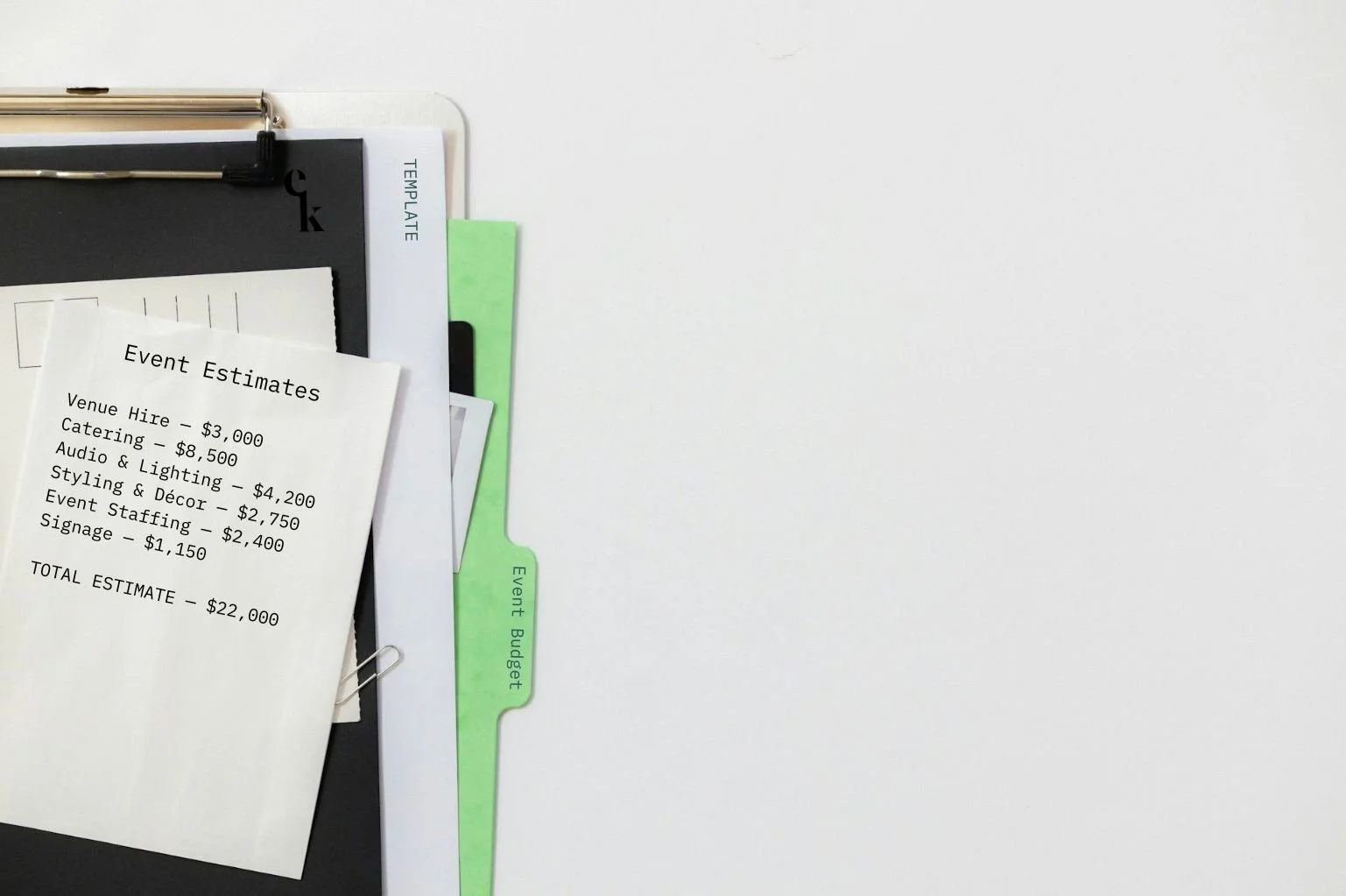


Meet Your Mentor
Rachella Thomas is an award-winning event producer with more than 26 years of experience delivering major events. Her work includes the Australian Open, Commonwealth Games Queen’s Baton Relay, Melbourne Food & Wine Festival, and other renowned large-scale events and festivals.
Rachella founded Event Kit, where she turns decades of professional event know-how into practical tools for event planners worldwide.
Learn More → ABOUT



Want to try Event Kit?
Get a professional Event Run Sheet template for free!





Description
Event Planning Starter Kit
Designed for:
Designed for new event planners who want a professional starting point without building every document from scratch.
Helps you:
When you’re new to events or just an occasional event organizer.
What’s included:
EXCEL
• Event Budget
• Event Plan Timeline
• Event Run Sheet
PDF
• Event Brief Writing Guide
• Event Plan Master Checklist
• Event Risk Management Guide
• Event Run Sheet User Guide
WORD
• Event Brief
• Event Risk Assessment Matrix
Plus:
• Built-in planning tips and guidance notes
• AI prompts to help you work faster
Pairs well with:
Any collection in the shop. There's no wrong combination — grab what fits your events and build from there.
Note: This is a digital product. No physical item is shipped.
Customer Service
Within a few minutes of purchase, you’ll receive an email with a link to download your files. The download link expires after 24 hours. If you can’t find the email, please check your Spam or Junk folder.
Need help getting started?
Notes and instructions are built into our templates to give you structure, guidance and practical real-life examples. These are not blank templates. They’re designed to guide you as you use them.
Still got questions?
Template Manual
FAQs
Contact Us
Template License
Event Kit templates are licensed for use by one business or sole operator. You can edit, customize and reuse them across every client, event, and project your business handles. Add your own branding, update colors and fonts, remove sections you don't need, and adapt the content to suit you.
Read full Template License