
Simple Steps to Build a Strong Event Sponsorship Pitch
EVENT PLANNING GUIDE
Simple Steps to Build a Strong Event Sponsorship Pitch
Updated on September 25, 2026 | Written by Rachella Thomas
Before you write a sponsorship proposal, you need to know who you're pitching to, why they're a good fit and what you're going to offer them.
A strong sponsorship pitch starts well before you open a proposal template. It starts with the groundwork: identifying the right potential sponsors, understanding your audience, and finding where their objectives and your event genuinely connect.
These five steps will help you build the strategy behind your sponsorship pitch before you start writing.
Already at the proposal stage? Read 5 Elements of a Winning Event Sponsorship Proposal for the essential sections to include and what a potential sponsor needs to see.
Step 1: Identify the Right Potential Sponsors
Finding the right sponsor is about quality, not quantity. Don't start by creating the longest possible list of companies to contact. Look for organisations whose customers, objectives, products, services, or values align with your event.
Ask yourself:
Who would benefit from reaching this audience?
Which businesses already operate within this space?
What products or services are relevant to the event or its attendees?
Are there organisations with an existing connection to the community, industry or subject?
A shorter list of genuinely relevant prospects is far more useful than a spreadsheet full of businesses you have no particular reason to approach.
Step 2: Work Out Why They're a Good Fit
Once you've identified potential sponsors, look at each one individually. Why does this particular organisation make sense for this particular event?
Research their business, customers, current partnerships, marketing activity and priorities. Look for genuine points of connection rather than trying to manufacture them afterwards.
Find and articulate meaningful ways to connect and collaborate. The question isn't simply, “Could they sponsor us?” It's “Why would they want to?”
Step 3: Know Your Audience
Your audience is one of the most important things you bring to a sponsorship conversation.
Sponsors are interested in your event because it gives them access to people they want to reach.
Understand who attends your event and, where possible, have useful information to support it.
That might include:
Audience size
Age or demographic information
Location
Interests
Buying behaviour
Industry or profession
Previous attendance
Digital and social reach
Then look at where your audience and the sponsor's audience overlap. A sponsor doesn't necessarily need the biggest audience. They need the right one.
Step 4: Decide What You Can Offer
Now work out what the partnership could actually look like.
Sponsorship isn't simply a business giving your event money in exchange for its logo appearing on a sign somewhere.
Depending on your event, you might be able to offer a range of diverse benefits that range from printed collateral through to event experiences:
Brand visibility
Access to a particular audience
Product sampling or demonstrations
Content opportunities
Naming rights
Hospitality
On-site activations
Digital exposure
Category exclusivity
Community association
Think about what has genuine value to that sponsor, as well as what your event can realistically deliver.
If you're not sure what form the partnership could take, our guide to 6 Types of Event Sponsorship and How They Work is a useful place to start.
Step 5: Tailor the Pitch
This is where the research you've done on the sponsor starts paying off.
Instead of sending the same sponsorship proposal to every organisation, use what you know about their business, their objectives and the audience they're trying to reach to shape your pitch.
Show them why you've approached them.
Highlight how your event and audience fit their business. Lead with the benefits most relevant to what they're trying to achieve, and leave out what isn't.
You don't need to rebuild your entire proposal every time. Keep the structure consistent, but tailor the content so it's clear why this particular sponsorship makes sense for them.
Should You Use a Sponsorship Proposal Template?
Once you're approaching multiple sponsors or managing sponsorship across several events, a strong pre-built structure makes the process much easier.
A good sponsorship proposal template gives you a ready-made starting point while still leaving room for you to tailor each proposal to the sponsor you're approaching.
If you’d rather not start from scratch, the Event Kit Sponsorship Toolkit gives you the professional structure behind the sponsorship process. This collection includes a fully editable, ready-to-use sponsorship proposal and the supporting tools to help you build and manage your sponsor offer.
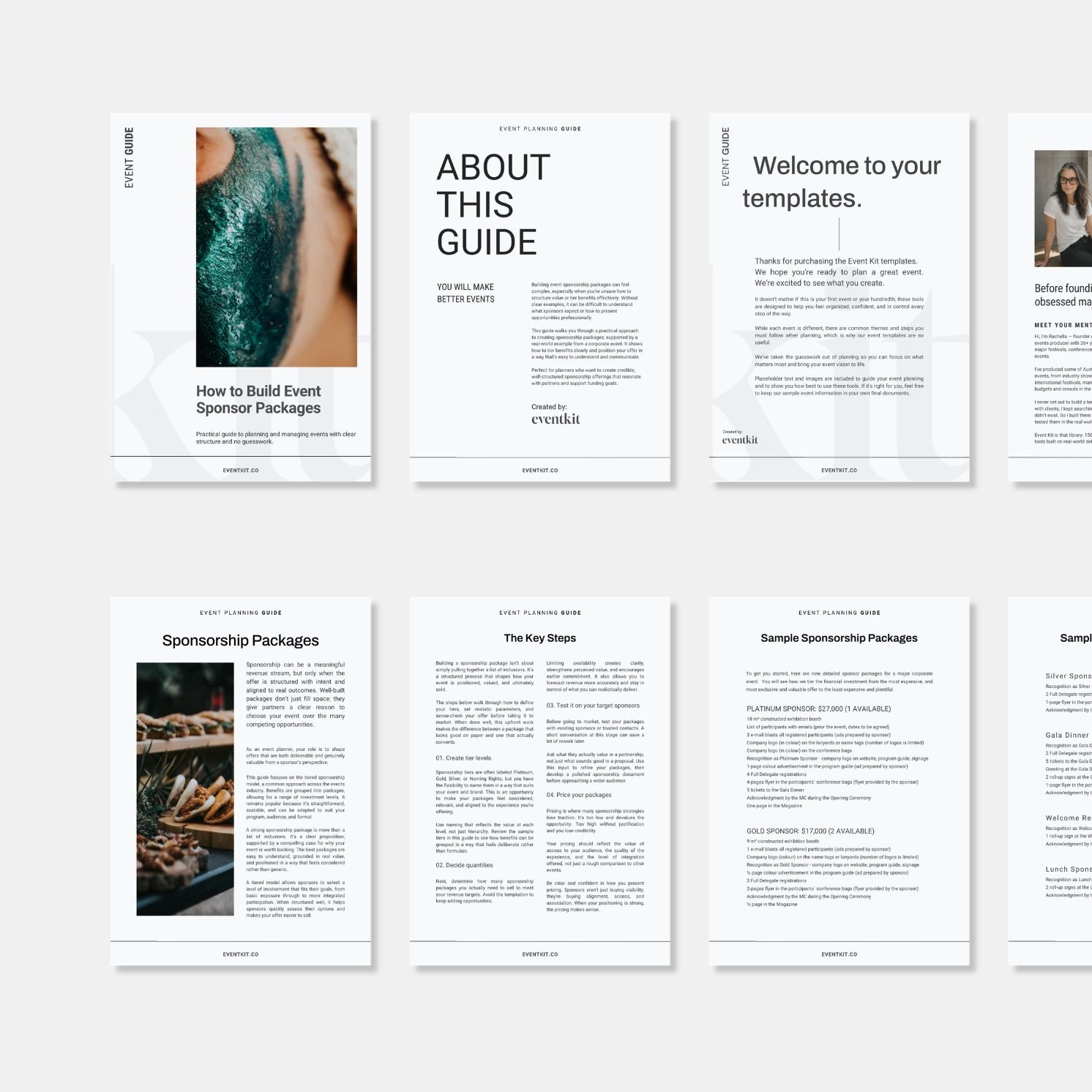
Event Sponsorship Pitch: You don't need to know everything before you start, but you do need a professional sponsorship proposal to support your pitch. Get it in the Event Sponsorship Kit.
→ If you found this useful, feel free to share it with a fellow event planner or your event network. They’ll appreciate you passing it on.
Related Reads


Meet Your Mentor
Rachella Thomas is an award-winning event producer with more than 26 years of experience delivering major events. Her work includes the Australian Open, Commonwealth Games Queen’s Baton Relay, Melbourne Food & Wine Festival, and other renowned large-scale events and festivals.
Rachella founded Event Kit, where she turns decades of professional event know-how into practical tools for event planners worldwide.
Learn More → ABOUT
Want to try Event Kit?
Get a professional Event Run Sheet template for free!




Description
Event Sponsorship Kit
Designed for:
Event planners, producers and organizations seeking sponsors, commercial partners and event funding.
Helps you:
Give potential sponsors a reason to say yes. Create professional sponsorship packages, proposals and agreements that clearly communicate your event’s value to potential sponsors.
What’s included:
EXCEL
• Sponsor Benefits Schedule
PDF
• How to Build Event Sponsor Packages
POWERPOINT
• Event Sponsorship Proposal Deck
• Creative Event Plan Pitch Deck
WORD
• Event Sponsorship Agreement
Plus:
• Built-in planning tips and guidance notes
• AI prompts to help you work faster
Pairs well with:
Any collection in the shop. There's no wrong combination — grab what fits your events and build from there.
Note: This is a digital product. No physical item is shipped.
Customer Service
Within a few minutes of purchase, you’ll receive an email with a link to download your files. The download link expires after 24 hours. If you can’t find the email, please check your Spam or Junk folder.
Need help getting started?
Notes and instructions are built into our templates to give you structure, guidance and practical real-life examples. These are not blank templates. They’re designed to guide you as you use them.
Still got questions?
Template Manual
FAQs
Contact Us
Template License
Event Kit templates are licensed for use by one business or sole operator. You can edit, customize and reuse them across every client, event, and project your business handles. Add your own branding, update colors and fonts, remove sections you don't need, and adapt the content to suit you.
Read full Template License